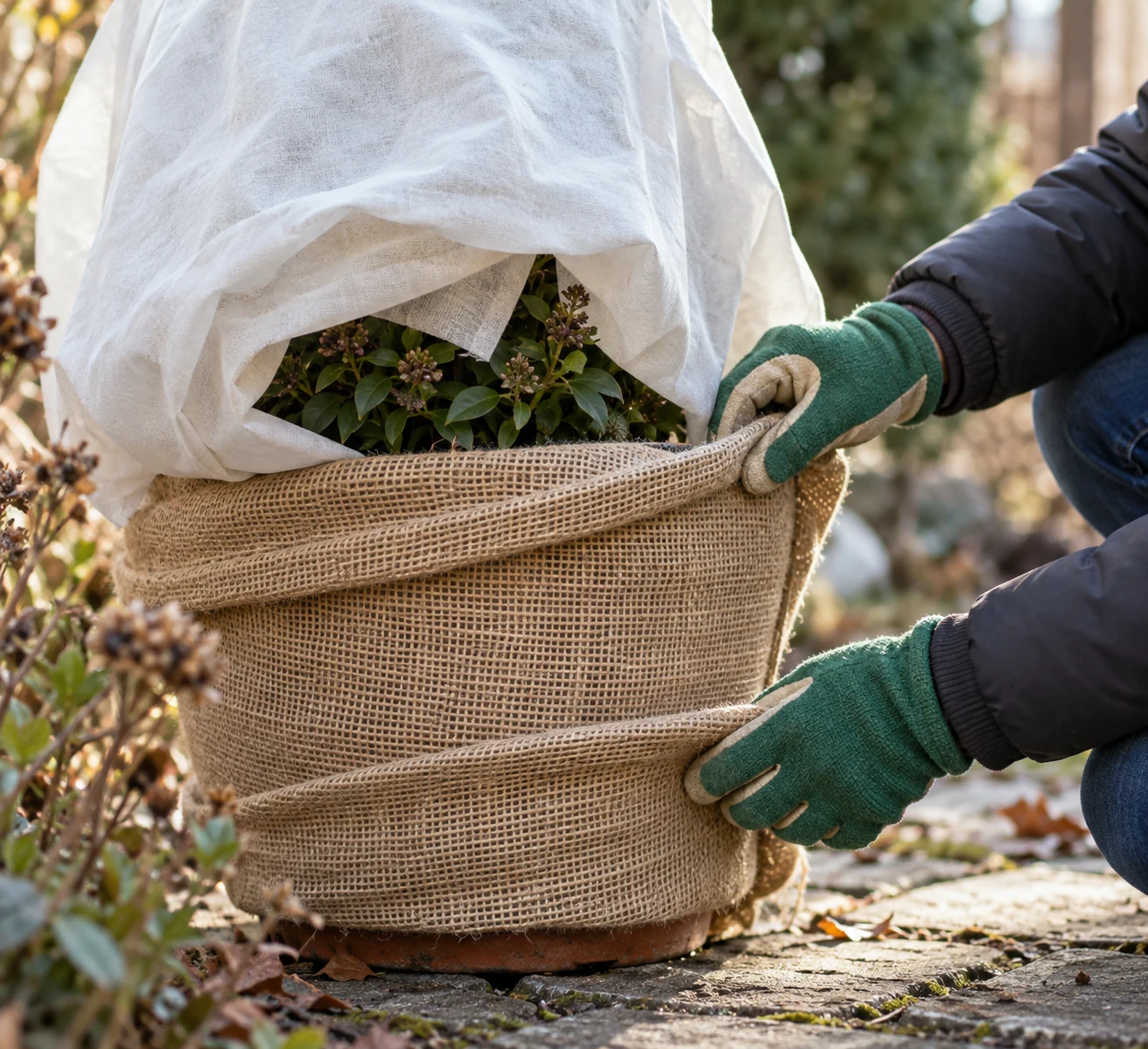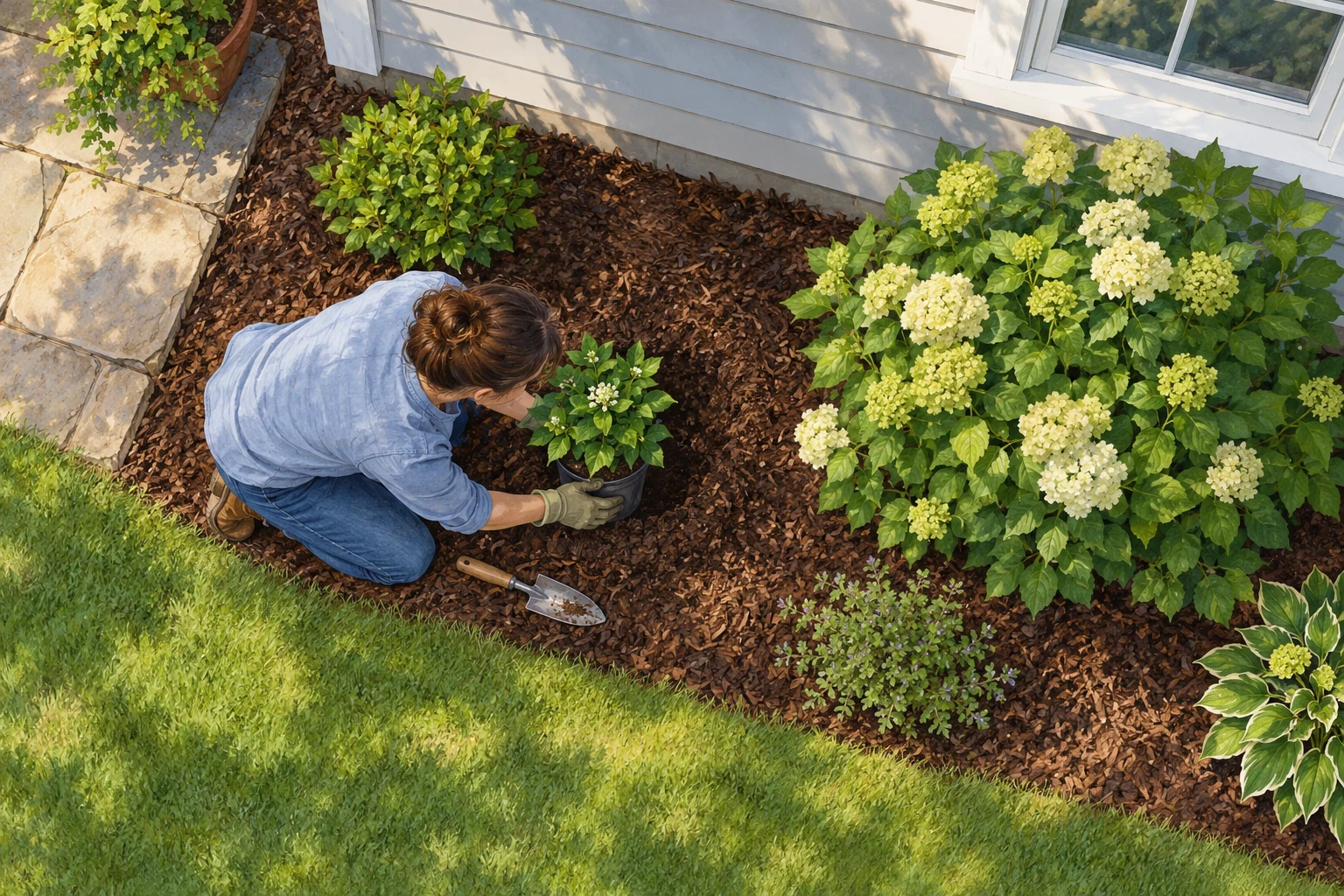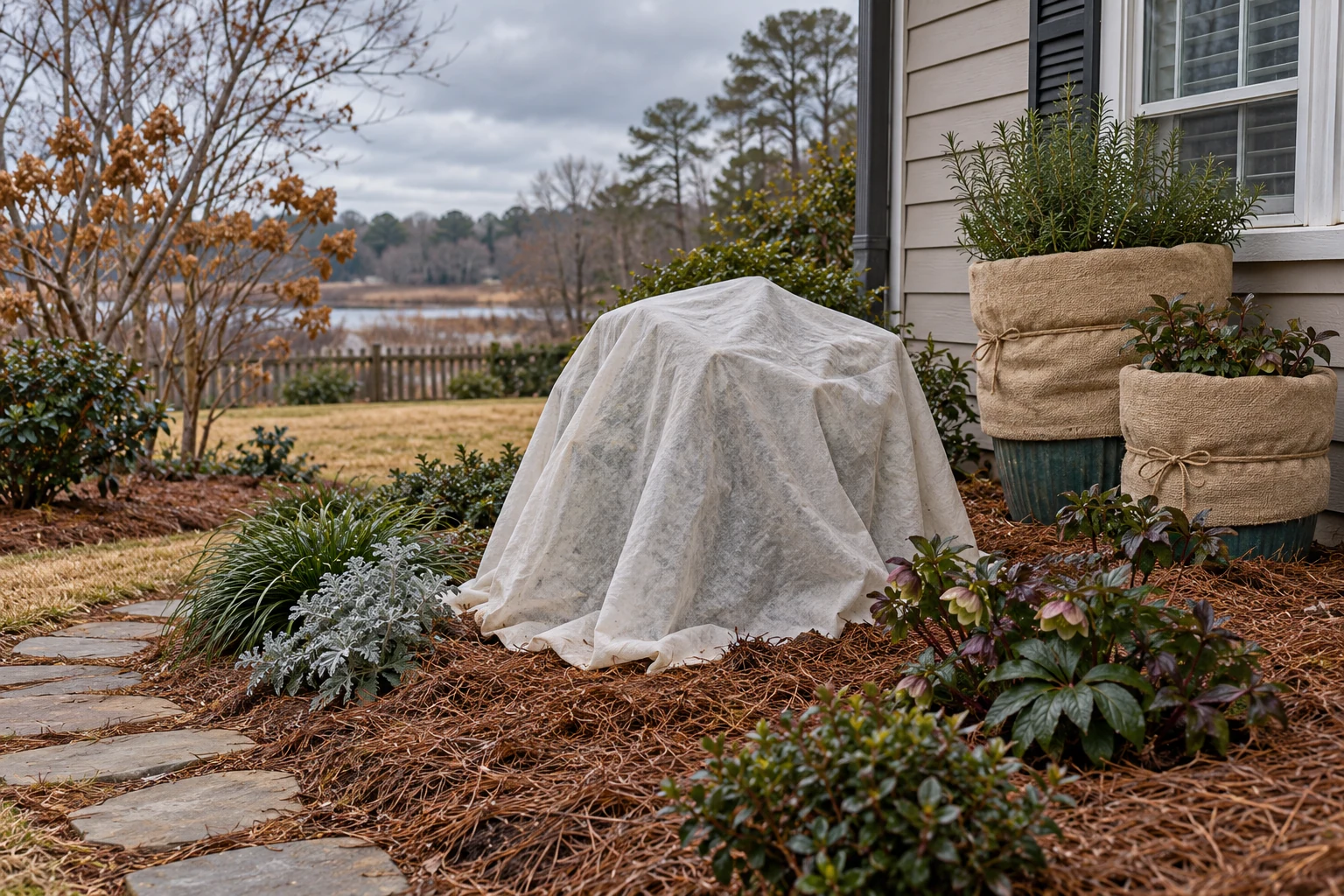
Winter garden care starts with preparing for sudden temperature drops. In Mississippi, severe cold often arrives during January and February, but cold snaps can also occur in March or early April. Tender landscape plants can suffer damage when temperatures fall abruptly. Watching the forecast and taking protective steps before freezing weather arrives can help reduce that risk. ## Start with containers, then work through the beds Organize your preparations around three tasks: moving containers, protecting the soil around roots, and covering tender plants. This gives you a clear route through the garden instead of treating every plant as the same kind of job. Begin by deciding which pots you can bring indoors and which must remain outside. For containers staying outdoors, think about protection in two parts: the pot and the plant above it. Wrapping only the container leaves the upper portion uncovered; covering only the top leaves the pot without the wrapping described in the source guidance. Put both parts on your preparation checklist, using plastic, burlap, or blankets around the pot and a covering over the top. Next, turn to planted beds. Treat mulch around the roots and sheets or blankets over tender growth as separate tasks. As you work, keep track of the plants you cover so that removing those coverings remains part of the same cold-weather plan. Container-grown plants are especially vulnerable because their roots sit above ground. Wrapping outdoor pots and covering their tops helps limit heat loss. Mulch also reduces heat loss from soil and helps protect roots during freezing conditions. Sheets or blankets over plants help retain warmth, and those coverings should come off once the cold weather has passed. Longer-term protection begins with plant selection and placement. Choose plants with cold tolerance suited to your area. South-facing portions of a property are generally warmer than northern portions; locations near the house or larger plants can also provide suitable places for tender plants. ## Make cold protection part of planting decisions Use planting season to address the choices that a temporary covering cannot make for you. Before purchasing a plant, read its tag for cold-hardiness information and compare that information with the requirements of your location. The practical question is whether the plant suits the cold it may encounter in your garden. Then consider where it will go. For a tender plant, review the warmer locations described above before choosing its planting spot. Think through plant selection and placement together: first identify an appropriate plant, then consider the most suitable position available for it. Keep routine care in the plan as well. Cold preparation includes both the immediate work of moving and covering plants and the ongoing work of maintaining their condition. When reviewing your garden care, include nutrition alongside your planting and protection decisions. Finally, use the forecast to connect these preparations to the weather ahead. Your checklist can stay simple: identify containers to move, prepare protection for those remaining outside, attend to mulch, cover tender plants, and remember the removal step when the cold has passed. Well-nourished, healthy plants can withstand temperature drops and recover from injury better than neglected plants. For additional guidance, the source points readers to Mississippi State University Extension Publication 2303, “Protecting Plants from Cold Temperatures.”