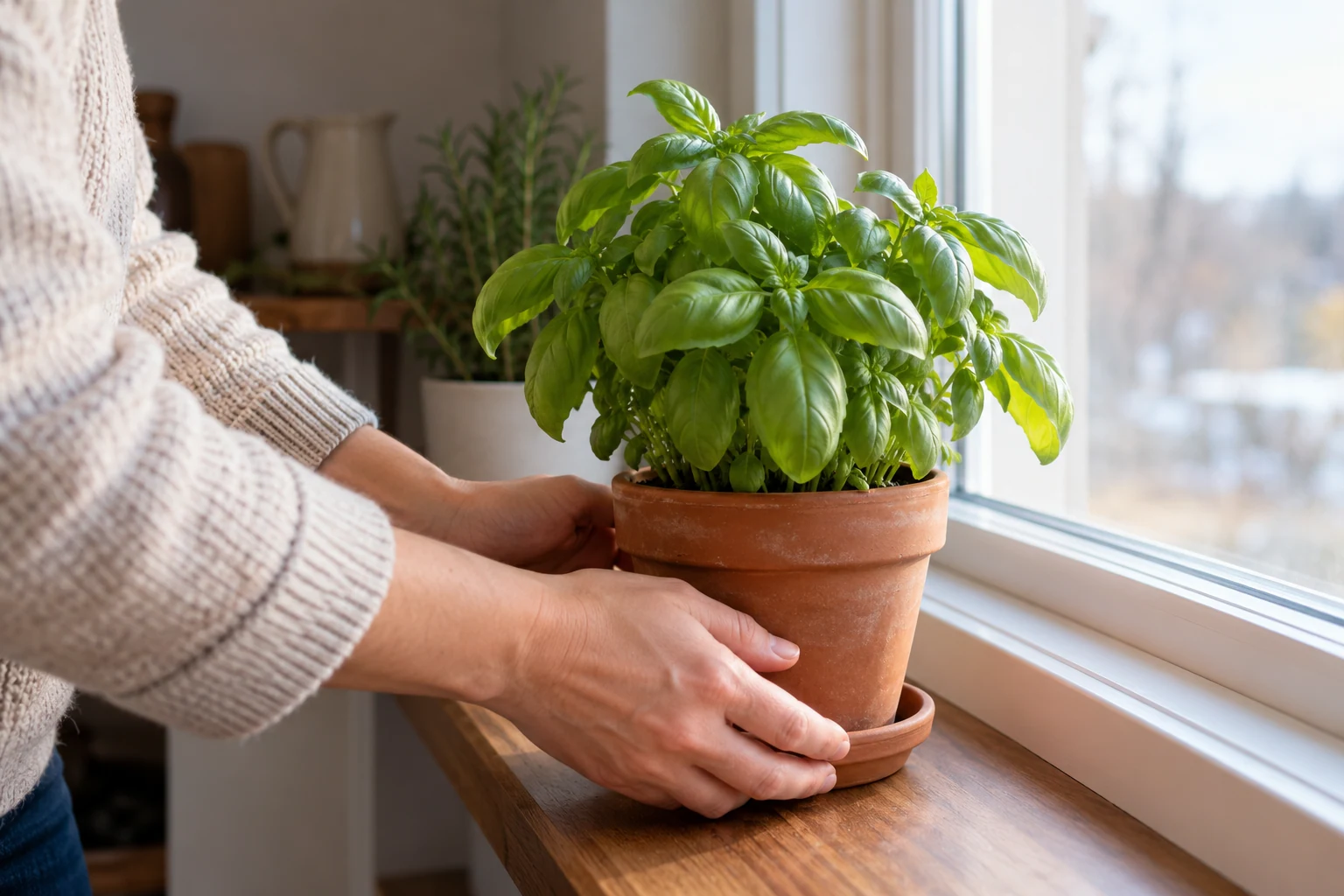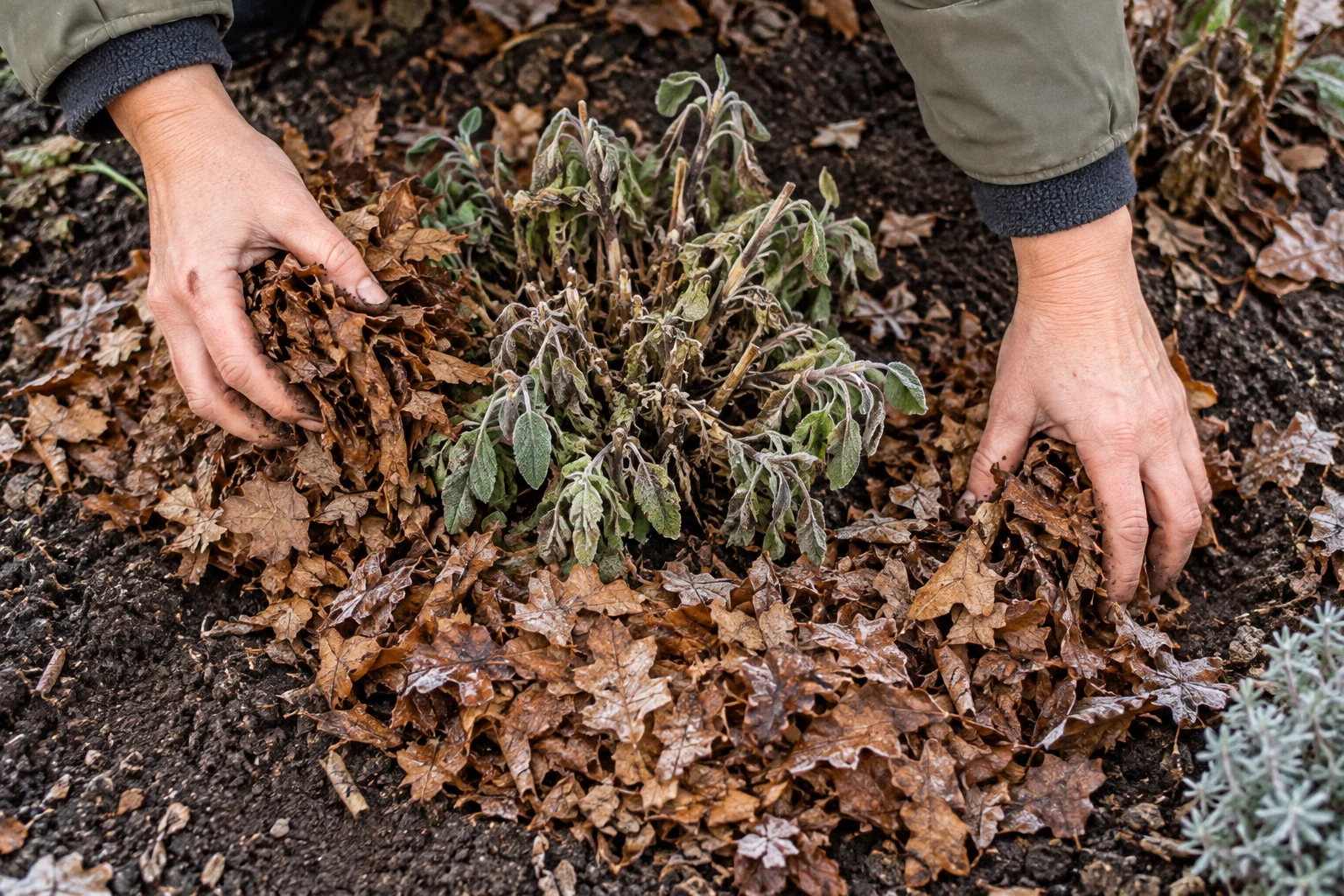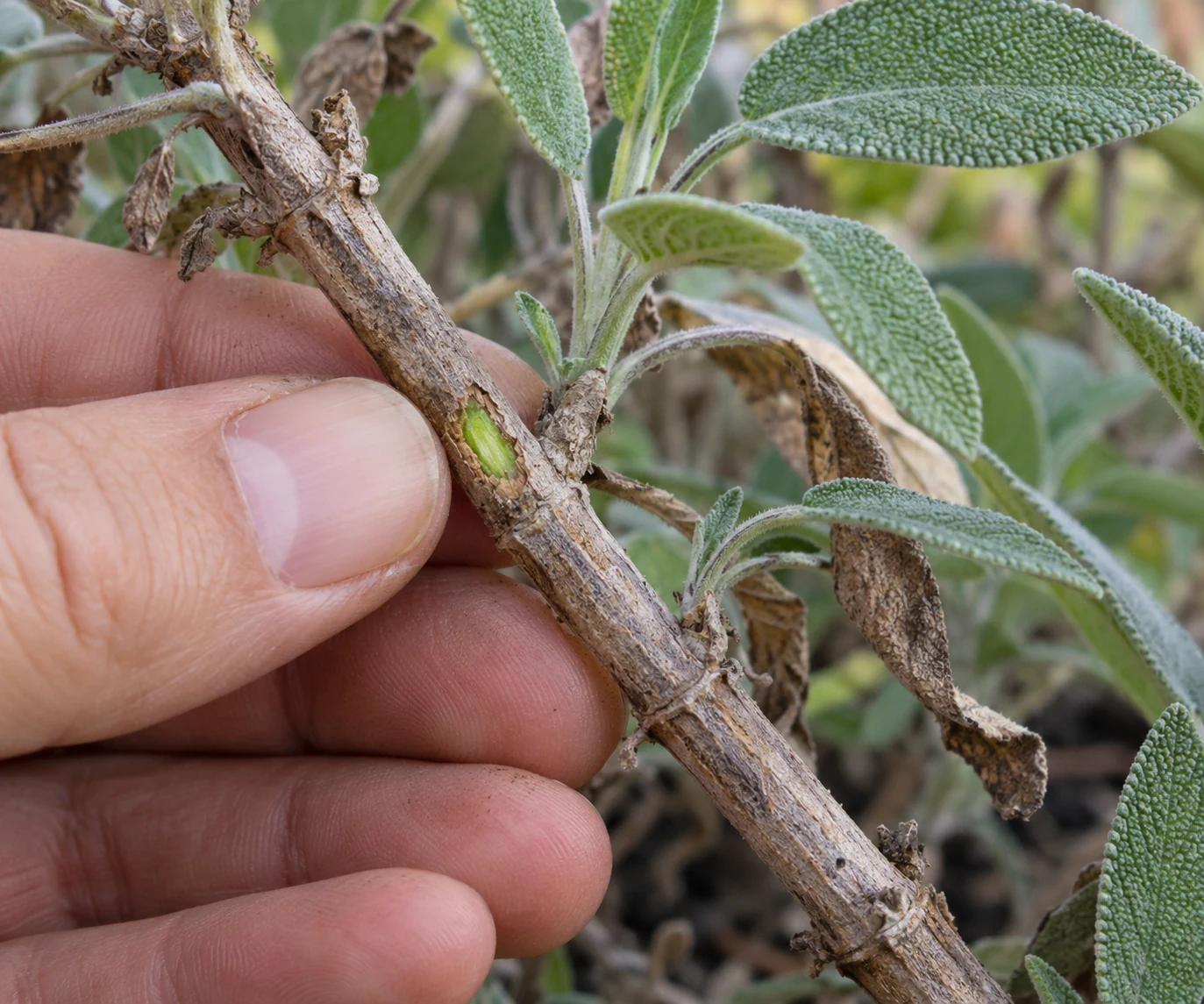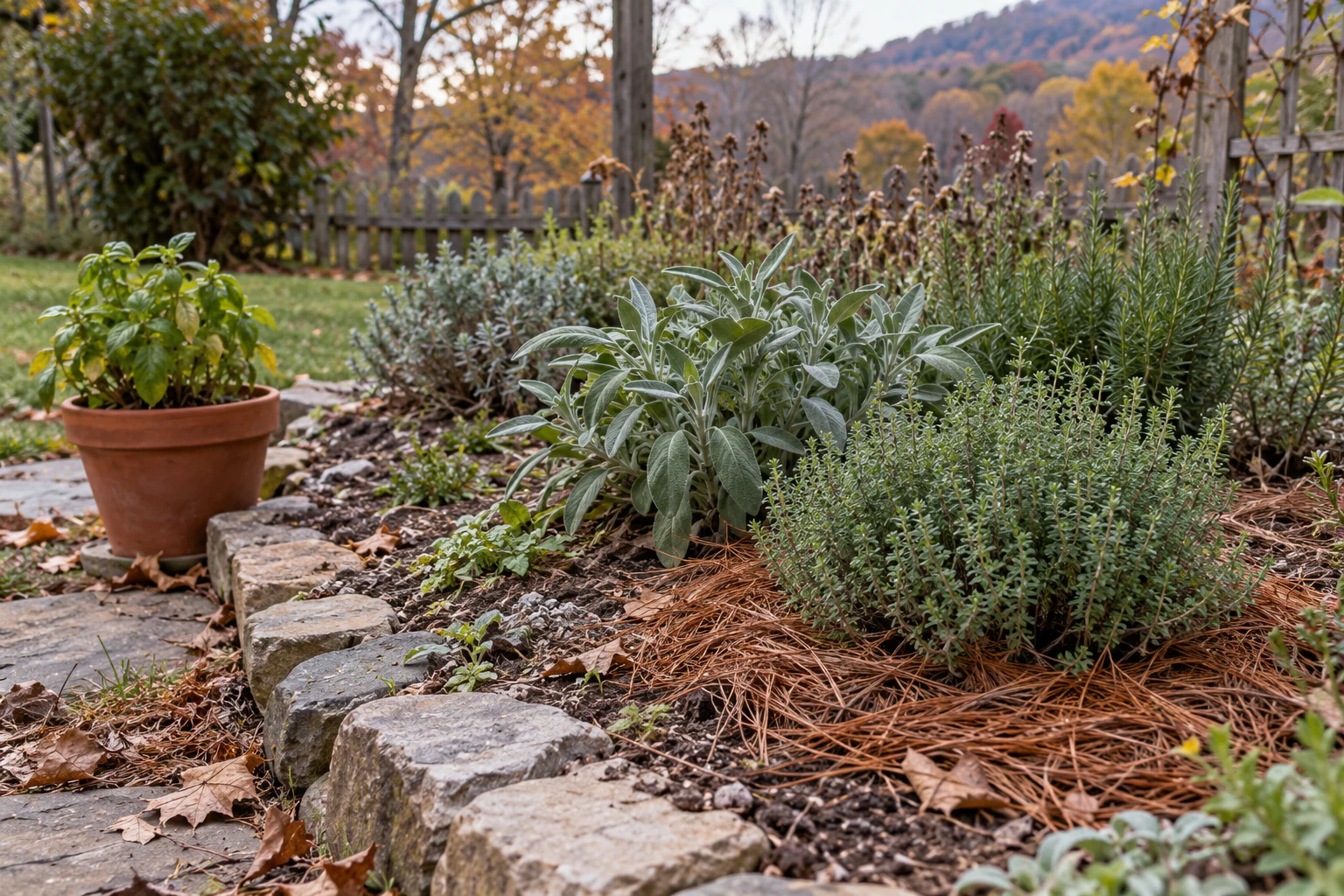
An herb garden can return for several seasons when its plants receive suitable winter care. The first task is deciding which herbs can stay outdoors and which need shelter or replacement. Many perennial herbs survive outside in some or all of North Carolina, while frost-sensitive plants need protection. Annual herbs die with a hard fall frost; removing their remains helps reduce places where insects and diseases can overwinter. ## Start with a plant-by-plant decision Work through the garden before choosing one treatment for the whole bed. For each herb, decide whether your winter plan is to leave it outside, add protection, or bring it indoors. Basil and geranium are examples of frost-sensitive plants that can be moved inside as whole potted plants or preserved through rooted cuttings. That gives you a practical alternative to replacing every tender plant next year. Keep the geography of the guidance in view. The source's hardiness categories refer to North Carolina's Mountains, Piedmont, and Coastal Plain. They also include qualifications: lavender and thyme vary by cultivar, and oregano varies by species. Use those distinctions when sorting plants rather than treating every herb with the same common name as equally hardy. ## Add protection at the right time Winter mulch moderates temperatures around roots and reduces heaving from repeated soil freezing and thawing. For herbs needing heavier protection, wait until after the first hard freeze, then apply 3–6 inches of straw, pine needles, or chopped leaves. Remove most of that covering when spring growth starts. Wind shelter also matters: drying winds can damage less hardy herbs, and evergreen boughs can help protect silver and lemon thyme foliage from drying. Think of winter protection as a sequence. First identify the plants that need extra help; then match the covering and its timing to that need. Putting down a heavy winter layer early can hold warmth in the soil and reduce hardiness. Waiting for the first hard freeze is therefore part of the protection method, not simply a convenient date on the calendar. For a plant receiving a mulch-filled wire cage, leave about six inches between the plant and the cage on every side. This is one protective option described for less reliably hardy perennial herbs. Consider exposure alongside the root covering: a sheltered position or windbreak addresses drying wind, while mulch addresses conditions around the roots. These measures serve different parts of the same winter plan. ## Support hardiness through everyday care The North Carolina guidance advises stopping fertilizer after early August and avoiding substantial August pruning, because both can encourage growth that may not mature before frost. Avoid severe pruning of woody herbs within 4–6 weeks of the first severe freeze. Wet soil can reduce hardiness, particularly in rosemary, thyme, lavender, and French tarragon. Adequate watering still matters: drought stress weakens plants, and dry-winter watering is especially important for evergreens before severe freezing. Separate moisture needs from drainage problems when reviewing the bed. A plant can need water during dry weather while also needing soil that does not remain excessively wet. Check for standing water and consider the source's drainage options—raised beds or incorporating pine bark—where wet conditions are a problem. Do not interpret a preference for good drainage as a reason to leave plants drought stressed. Treat harvesting and major cutting as separate decisions, too. The guidance permits light harvesting while cautioning against substantial pruning at sensitive times. Before making a large cut, consider how close the garden is to its first severe freeze. The aim is to avoid prompting vulnerable growth or leaving severe cuts without enough time to heal. ## Reassess before spring pruning A useful winter plan includes a return visit when growth resumes. Remove most of the heavy winter mulch at that stage and inspect outdoor woody herbs before deciding what to cut. Brown foliage alone does not settle whether a plant has died. Checking several stems gives you a better basis for the pruning decision than judging the whole plant by its winter appearance. Apply the same patience to herbs brought indoors. Leaf loss can reflect inadequate light, while lemon verbena naturally loses all its leaves indoors. Keep that distinction in mind when assessing an overwintered plant: its appearance needs to be interpreted in light of the kind of herb and the conditions it has experienced. For outdoor rue, sage, thyme, or southernwood that looks dead after winter, gently scrape the bark on a few stems. Brown leaves may be dehydrated, or damage may extend nearly to ground level. If the tissue beneath the bark is green, postpone pruning until new growth begins.